A lot of AI products look differentiated on the surface. They have a sleek interface, a polished demo, and a strong model behind the scenes. But if you can swap GPT-4 with Claude or Gemini and nothing important changes, you are probably not looking at real defensibility.
You are looking at a wrapper.
Real AI products go deeper. As an investor and operator, I usually look for three signals that distinguish built-in intelligence from bolted-on AI.
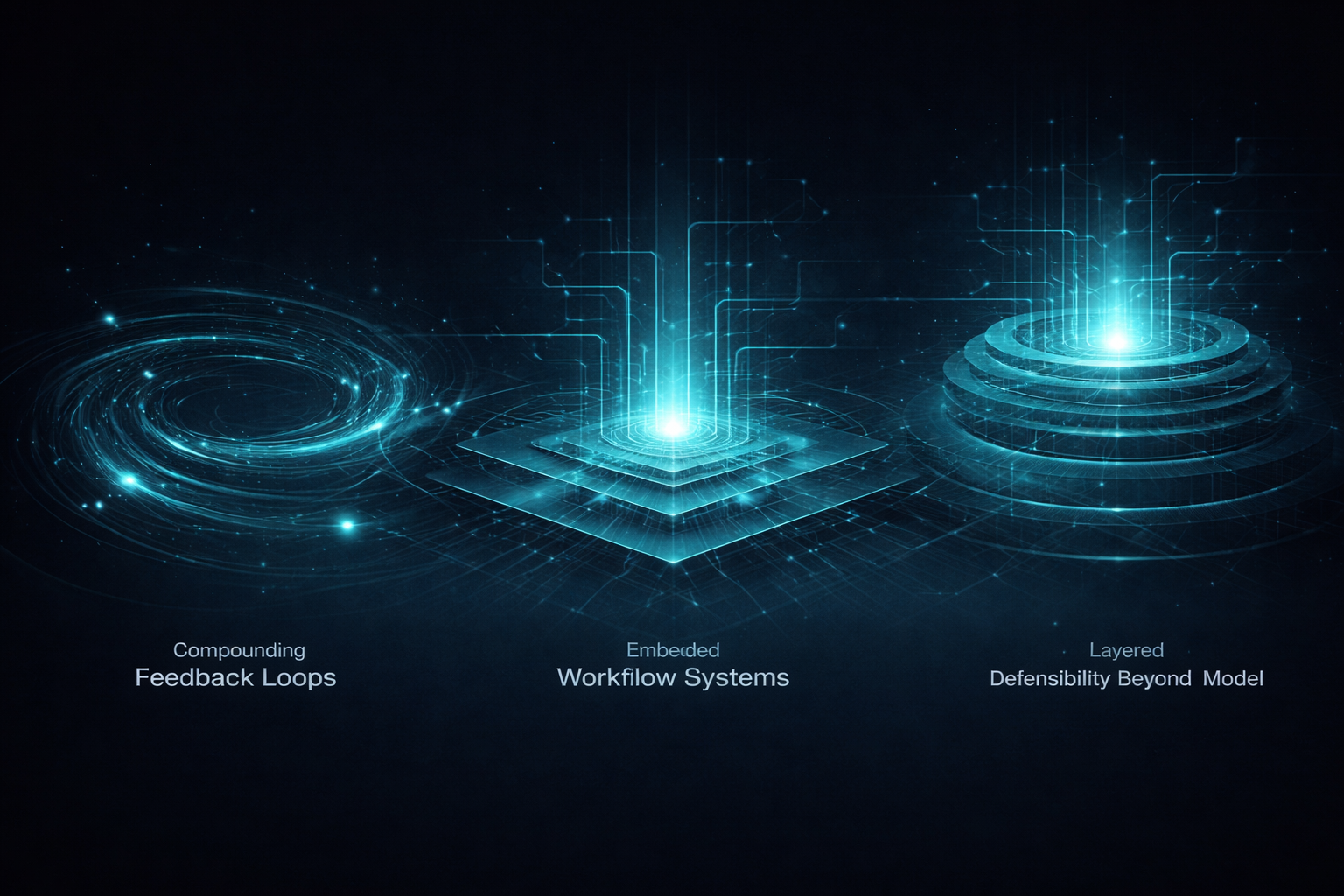
1. Data Loops That Compound
Not all data creates a moat.
A stronger signal is when each user interaction generates unique, structured data, that data improves the system’s decisions, and those better decisions improve outcomes in a way that attracts more users or more engagement.
That is not just data. That is a compounding feedback loop.
The distinction matters. A database is not a moat. A system that learns from outcomes and gets harder to replicate over time can become one.
2. Workflow Transformation
AI is most powerful when it is not just a feature layered on top of the workflow, but part of the workflow itself.
One question helps reveal the difference:
If the AI disappears, does the workflow still function?
- If yes, it is probably still a tool.
- If no, it is likely embedded intelligence.
The strongest products are the ones where AI is integrated into core operations deeply enough that removing it would materially break how the system works.
3. Differentiation Beyond the Model
Models are becoming increasingly interchangeable. That means the model itself is less likely to be the durable source of advantage.
Real differentiation usually comes from the surrounding system:
- Proprietary data
- Deep integrations
- Workflow design
- System-level intelligence
If your advantage disappears when the model changes, you do not really have a moat. You have a dependency.
What This Means in Practice
A wrapper can still be useful. It can even become a good product. But usefulness is not the same as defensibility.
Defensibility starts to appear when the product learns from outcomes, changes the workflow, and builds advantage in the system around the model rather than in the model alone.
The Real Test
When you look at an AI product, do not ask only whether the demo is impressive.
Ask:
- Does the system learn from use?
- Does it change the workflow in a meaningful way?
- Would the product still look differentiated if the model changed tomorrow?
That is usually where the real answer is.